
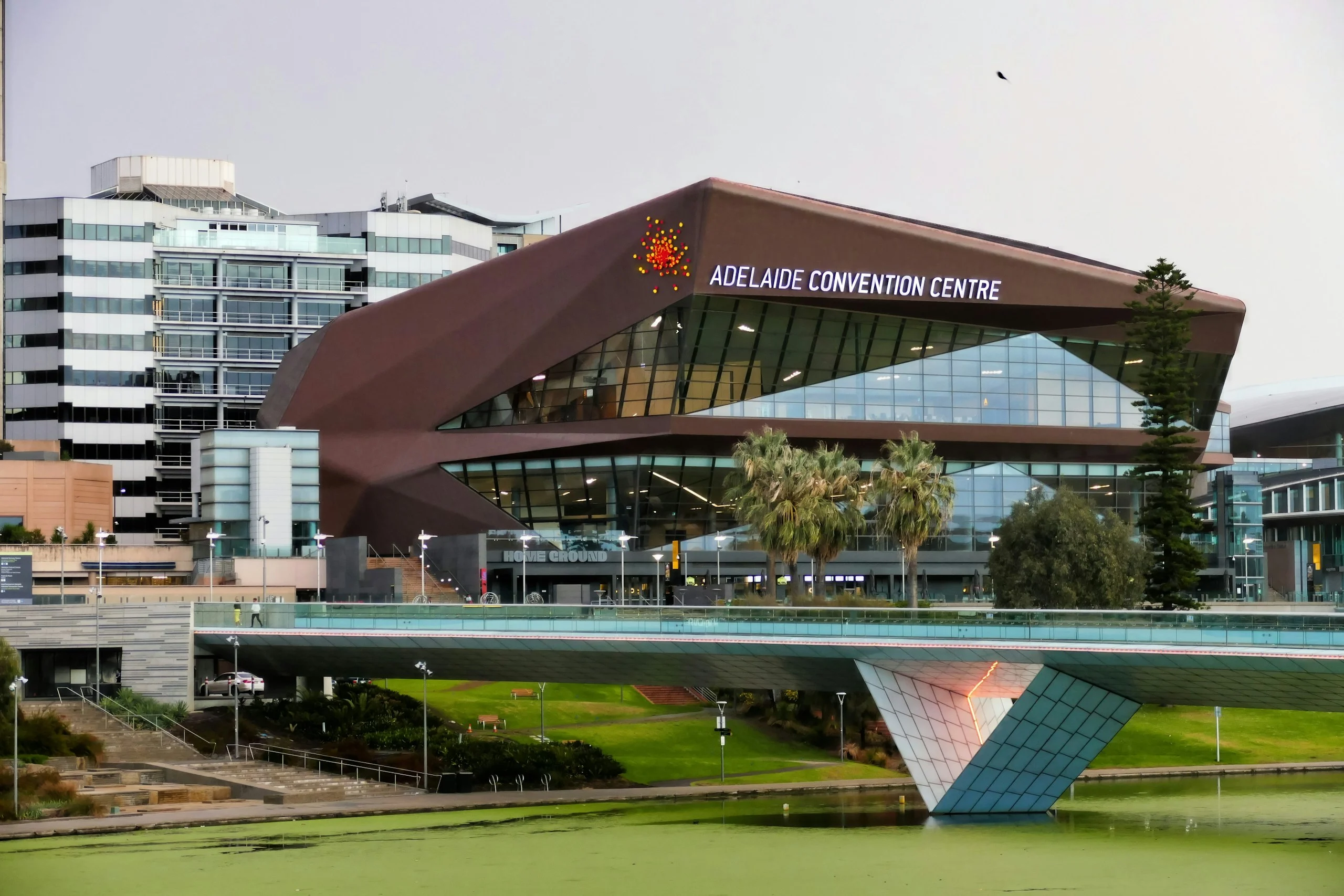
Hiring in Adelaide
Skills Shortages in Adelaide: What the 2026 Data Shows
Skills shortages remain a consideration for Adelaide businesses hiring professional talent, even as Australia’s overall shortage rate continues to decline. In the 2026 Occupation Shortage List, 37% of assessed Professional occupations were classified as being in national shortage. Across all assessed occupations, the figure was 27%, down from 36% in 2023.
These figures provide a national picture rather than an Adelaide-specific measure. Separate recruitment research from Jobs and Skills Australia offers a more local perspective: 49% of recruiting employers in Greater Adelaide reported difficulty recruiting in the year to February 2026.
For businesses planning their workforce, the distinction matters. National shortage data helps identify occupations experiencing recruitment pressure, while local recruitment evidence provides additional context for Adelaide employers.
Key findings: Adelaide and Australia’s skills shortage picture
The latest evidence highlights several important developments:
- 37% of Professional occupations were in national shortage in 2026.
- 27% of all assessed occupations were in national shortage, representing 279 of 1,021 occupations.
- The overall shortage rate has declined from its 2023 peak of 36% to 27% in 2026.
- 48% of Technicians and Trades Workers occupations were in shortage, the highest rate among the major occupational groups.
- 49% of recruiting Greater Adelaide employers reported difficulty recruiting in the year to February 2026.
Together, these findings show that although Australia’s overall shortage rate is easing, recruitment challenges remain relevant, particularly in professional and technical occupations. The Greater Adelaide employer survey provides separate local evidence of recruitment difficulty.
What does the 2026 skills shortage rate measure?
The Occupation Shortage List (OSL), published annually by Jobs and Skills Australia, assesses whether employers are experiencing difficulty recruiting suitably qualified and experienced candidates for particular occupations.
The 2026 assessment found that 279 of 1,021 assessed occupations were in national shortage. This represents 27% of occupations assessed.
The Professional major group recorded a shortage rate of 37%. This means that 37% of the occupations classified within that group were assessed as being in shortage. It does not mean that 37% of Australian professionals are unemployed, unavailable or looking for work.
The distinction is important when interpreting the results. The OSL measures occupations, not individual workers, vacancies or the proportion of employers struggling to recruit.
How does Jobs and Skills Australia assess occupational shortages?
The OSL uses a combination of quantitative modelling, labour-market evidence, manual assessment and stakeholder feedback.
- Initial modelling: A statistical model helps identify potential shortage occupations.
- Manual verification: Researchers examine labour-market indicators, recruitment evidence and qualitative information.
- Stakeholder feedback: Industry and other relevant stakeholders contribute additional evidence to the assessment.
The 2026 assessment uses the Occupation Standard Classification for Australia (OSCA) 2024 and ANZSCO 2022, with occupations at Skill Levels 1 to 4 within scope.
The list is employer-focused and primarily driven by recruitment activity. It provides an assessment of labour-market conditions at a particular point in time, rather than a forecast of future employment demand.
Skills shortages are easing, but professional occupations remain under pressure
Australia’s overall occupational shortage rate has declined for three consecutive assessments since its 2023 peak.
| OSL year | Occupations in national shortage |
|---|---|
| 2022 | 31% |
| 2023 | 36% |
| 2024 | 33% |
| 2025 | 29% |
| 2026 | 27% |
Source: Jobs and Skills Australia, 2026 Occupation Shortage List Key Findings Report.
The rate has fallen by nine percentage points since 2023. This indicates an easing in the overall number of occupations classified as being in shortage, although it does not mean recruitment pressure has disappeared.
The 2026 results also show that shortage conditions are not distributed evenly across occupational groups.
Which occupational groups have the highest shortage rates?
Professional occupations recorded a 37% shortage rate, while Technicians and Trades Workers recorded 48%.
The difference highlights why the overall national figure needs context. Although 27% of occupations were in shortage across the entire assessment, some occupational groups continue to experience considerably higher rates.
Professional occupations also feature prominently among persistent shortages.
Jobs and Skills Australia identified 127 occupations that remained in shortage continuously from 2021 to 2026. Of these, 46 were Professional occupations and 69 were Technicians and Trades Workers. Together, these two groups represented 115 of the 127 persistent shortage occupations.
This suggests that some recruitment challenges are more persistent than the overall national trend might indicate.
What do recruitment indicators reveal about skills shortages?
The shortage classification is supported by differences in recruitment outcomes between occupations assessed as being in shortage and those not classified as being in shortage.
Jobs and Skills Australia’s 2026 report provides several useful indicators.
| Recruitment indicator | Shortage occupations | Occupations not in shortage |
|---|---|---|
| Vacancy fill rate | 57% | 78% |
| Recruitment difficulty | 54% | 36% |
| Average vacancy duration | 10.6 weeks | 7.8 weeks |
| Suitable applicants per vacancy | 3.3 | 6.3 |
Source: Jobs and Skills Australia, 2026 OSL Key Findings Report. Reference period: 2025–26.
Lower vacancy fill rates
Occupations classified as being in shortage had a vacancy fill rate of 57%, compared with 78% for occupations not in shortage.
This indicates that vacancies associated with shortage occupations were less likely to be filled through the measured recruitment process.
Greater recruitment difficulty
Recruitment difficulty was reported for 54% of shortage occupations, compared with 36% of occupations not in shortage.
This supports the broader finding that employers recruiting for shortage occupations generally face more challenging hiring conditions.
Longer vacancy durations
Average vacancy duration was 10.6 weeks for shortage occupations, compared with 7.8 weeks for occupations not in shortage.
The difference is 2.8 weeks, calculated from the reported averages.
Fewer suitable applicants
Shortage occupations had an average of 3.3 suitable applicants per vacancy, compared with 6.3 for occupations not in shortage.
This helps explain why simply increasing recruitment activity may not resolve every hiring challenge. The availability of applicants who meet the relevant requirements also matters.
These are national recruitment indicators. They should not be interpreted as the expected vacancy duration or recruitment outcome for an individual Adelaide employer.
What do the skills shortage figures mean for Adelaide businesses?
The national OSL provides useful context, but local recruitment conditions offer another perspective.
In the year to February 2026, 49% of recruiting employers in Greater Adelaide reported difficulty recruiting. Across South Australia, the equivalent figure was 47%.
These figures come from Jobs and Skills Australia’s Recruitment Experiences and Outlook Survey, not the Occupation Shortage List.
The two measures answer different questions:
- The OSL assesses whether particular occupations are in national shortage.
- The recruitment survey measures the proportion of recruiting employers reporting difficulty finding suitable candidates.
For Adelaide businesses, using both sources gives a more complete view of the recruitment environment without suggesting that the national professional shortage rate applies directly to the local market.
Consider which roles are creating recruitment pressure
The national findings suggest that professional and technical occupations deserve attention when businesses review their workforce requirements.
However, a national occupation classification does not establish whether a particular role is difficult to fill in Adelaide. Employers should also consider the actual skills required, candidate availability, seniority, location and recruitment experience.
Separate essential local responsibilities from remote-capable work
Not every role needs to be filled through the same recruitment model.
Some responsibilities require local presence, regulatory knowledge, client interaction or direct operational oversight. Other work may involve defined administrative, documentation, customer support or back-office processes that can potentially be handled remotely.
Where appropriate, businesses can consider whether offshore professionals could complement their local workforce.
This is a workforce-planning option rather than a guaranteed solution to skills shortages. Suitability depends on the role, workflow, management requirements, data access and operational needs.
What the 2026 skills shortage data does not tell Adelaide employers
The Occupation Shortage List is useful for understanding national recruitment conditions, but it has limitations.
It does not establish:
- The percentage of Adelaide professional occupations experiencing shortages.
- Whether an individual employer will struggle to recruit.
- The salary or employment cost of a particular occupation.
- How long a specific vacancy will take to fill.
- Whether a role can be performed remotely.
- Whether offshore staffing will produce a particular cost saving or recruitment outcome.
- How severe a particular shortage is or whether it will continue in the future.
The list is a point-in-time assessment, not a forecast. Its results should therefore be considered alongside current local recruitment conditions and the specific requirements of each business.
For Adelaide employers, the Greater Adelaide recruitment survey offers useful local context, but it should not be substituted for occupation-specific local shortage ratings.
Conclusion: Plan for recruitment pressure, not just headline shortage rates
Australia’s overall occupational shortage rate has eased from 36% in 2023 to 27% in 2026. However, 37% of Professional occupations remain in national shortage, while professional and technical roles account for a substantial share of occupations experiencing persistent shortages.
For Adelaide businesses, the separate finding that 49% of recruiting Greater Adelaide employers reported recruitment difficulty adds important local context.
The practical takeaway is to assess workforce requirements at the role and task level. Businesses can review which responsibilities genuinely require local employees, where recruitment pressure exists and whether some defined workloads could be supported by remote or offshore talent.
The objective is not to replace every local hire, but to build a workforce model that gives the business appropriate capacity, skills and flexibility.
Frequently asked questions
What percentage of Australian occupations are in shortage in 2026?
According to Jobs and Skills Australia’s 2026 Occupation Shortage List, 27% of assessed occupations were in national shortage. This represented 279 of 1,021 occupations.
What percentage of Professional occupations are in shortage?
In 2026, 37% of occupations in the Professional major group were classified as being in national shortage. This is a share of occupations, not individual professionals.
Are skills shortages improving in Australia?
The overall national shortage rate has declined from 36% in 2023 to 27% in 2026. However, some occupational groups continue to experience higher shortage rates, including Professionals and Technicians and Trades Workers.
Are employers in Adelaide experiencing recruitment difficulties?
Yes. Jobs and Skills Australia’s recruitment survey found that 49% of recruiting employers in Greater Adelaide reported difficulty recruiting in the year to February 2026. This is an employer-reported recruitment measure, not an occupation shortage rate.
Can offshore staffing help Adelaide businesses respond to recruitment challenges?
Offshore staffing may provide additional workforce capacity for suitable tasks that can be performed remotely. However, the OSL does not establish that offshore staffing will resolve a particular shortage or generate specific savings. Businesses should assess the responsibilities, skills, oversight and operational requirements of each role.
Related metrics
Not sure where to start?
In a free strategy session, we’ll look at which tasks could be handled by an offshore team member alongside your local team, and which are better kept in-house.
Book My FREE Strategy SessionNo obligation. No sales pressure. No preparation needed.
Sources and methodology
This article uses Jobs and Skills Australia’s 2026 Occupation Shortage List and its associated methodology, alongside the agency’s recruitment research for South Australia and Greater Adelaide.
- 2026 Occupation Shortage List: Key Findings Report
- 2026 Occupation Shortage List Methodology
- 2026 Occupation Shortage List announcement, 21 October 2026
- Recruitment snapshot: South Australia
- Recruitment snapshot: Adelaide and South Australia
Methodology note
The OSL is an annual, point-in-time assessment of Australian occupations. The 2026 list uses OSCA 2024 and ANZSCO 2022 and covers occupations at Skill Levels 1–4.
The overall shortage percentage represents the proportion of assessed occupations classified as being in national shortage. The Professional shortage percentage uses occupations within the Professional major group as its denominator.
The Greater Adelaide recruitment difficulty figure comes from a separate employer survey. It measures recruiting employers reporting difficulty and must not be combined with the OSL shortage percentage.
Get Started With Confidence
When your platform is secure and your risk is managed, you can scale your marketing with total confidence. Offshore 24/7 secures that capital protection for you.

Michael C.
Web Dev

Karen P.
Real Estate VA

Ranilyn G.
Property Manager

Mary D.
Auditor & Accountant