
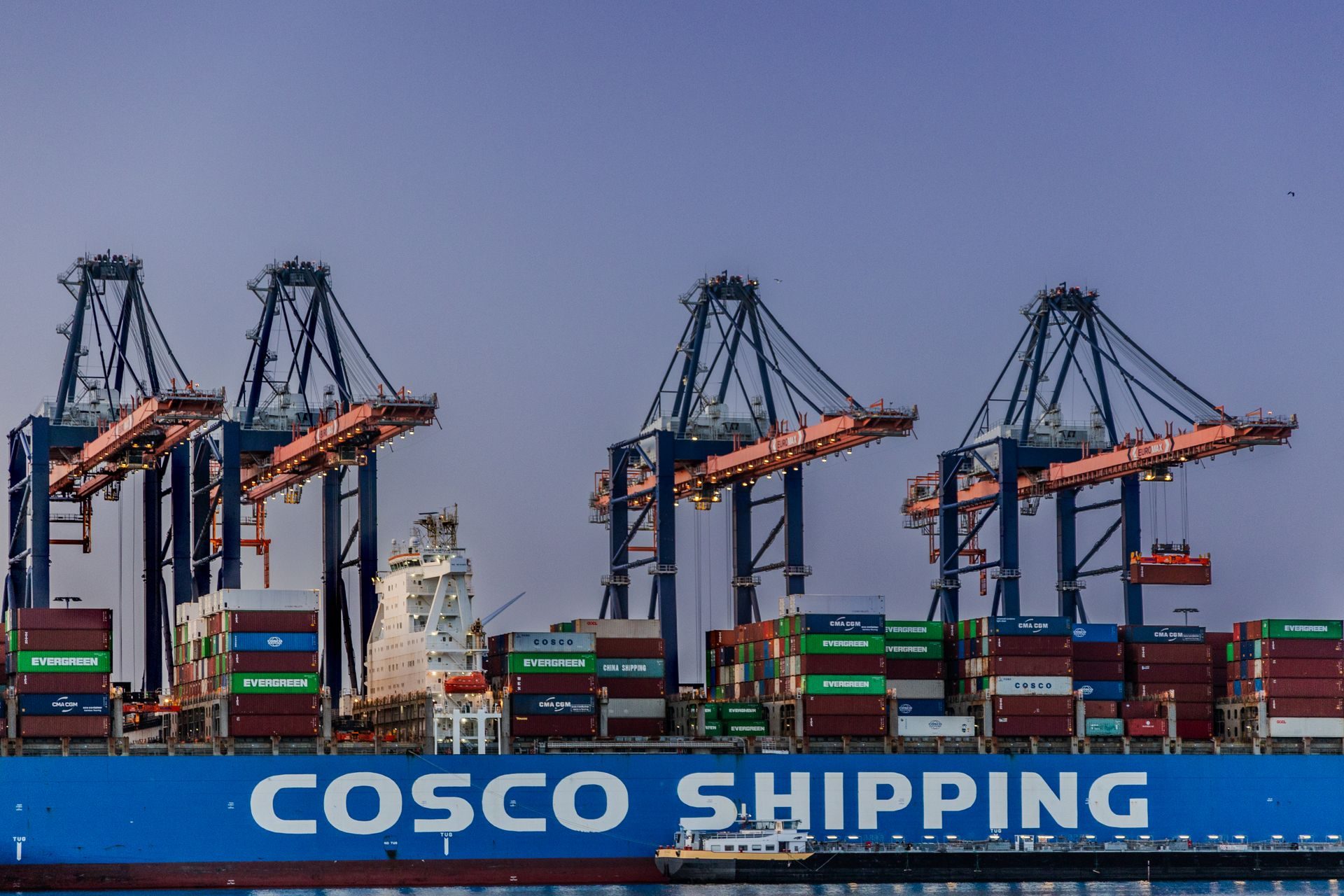
EXAMPLE SCENARIO · ROTTERDAM · FREIGHT AND PORT LOGISTICS
How Your Rotterdam Freight Forwarding Business Could Build an Offshore Freight Documentation Team
A practical example of how your Rotterdam freight forwarding business could add shipment-file, document-check and customer-update capacity with a dedicated offshore Freight Documentation Coordinator, arranged through Offshore 24/7.
The Business Scenario
A Rotterdam freight forwarder handles full- and part-container shipments between Asia and Europe. Its operations team manages bookings, shipment files, carrier communication, document checks and customer updates across a steady flow of inbound containers.
During busy periods, experienced operators can spend a significant part of their day opening shipment files, checking documents, updating milestones and chasing missing information. That routine workload can leave less time for exceptions, carrier issues and customer escalations.
One option is to add a dedicated offshore coordinator for defined documentation and follow-up work. Your Rotterdam team keeps control of customs, regulatory filings, carriers, commercial decisions, exceptions and customer escalations.
What the Coordinator Could Handle
You could start with a defined scope: administrative support for import shipment files on one trade lane.
| Area | What the offshore coordinator does |
|---|---|
| Shipment files | Opens shipment files from approved bookings and attaches commercial invoices, packing lists, bills of lading and other supplied documents. |
| Document checks | Compares document details against the booking and approved checklists, recording missing information and flagging inconsistencies. |
| Customer ETA updates | Sends routine ETA and status updates using approved templates and current information from authorised sources. |
| Freight invoice checks | Compares carrier and supplier invoices against agreed rate sheets and flags differences for local review. |
| Booking-system updates | Updates vessel, container and shipment milestones in the forwarding system within assigned permissions. |
| Follow-ups | Requests missing documents and routine confirmations from carriers, agents and suppliers using approved communication procedures. |
The coordinator performs administrative checks, not customs or regulatory certification. They do not independently determine whether a shipment meets customs requirements or whether its documentation is legally sufficient for clearance.
Once accuracy is established, you could expand the scope to additional trade lanes, export-file administration or other defined preparation tasks, provided the required procedures, permissions and review arrangements are in place.
What Stays With Your Rotterdam Team
Your offshore coordinator supports the paperwork and routine follow-up. Decisions involving customs, safety, cargo release, money and customers stay with your authorised local staff and appropriately appointed representatives.
This includes:
- Customs declarations, customs representation and customs compliance decisions.
- ENS and ICS2 filing responsibilities, where your business is the responsible filer.
- Commodity classification, customs valuation, origin and customs procedure decisions.
- Dangerous-goods classification, declarations and approvals.
- Sanctions, export-control and restricted-cargo decisions.
- Cargo inspections and decisions on held or examined cargo.
- Bill of lading amendments, endorsements, surrender and switch-bill instructions.
- Delivery orders, telex release and cargo-release authorisations.
- Carrier rates, negotiations and commercial commitments.
- Shipment exceptions, including delays, rollovers, demurrage, detention and claims.
- Customer escalations and contractual terms.
- Regulatory accountability, including applicable AEO obligations.
Where a carrier, freight forwarder or another party is responsible for an ENS filing, the parties must establish that responsibility under the relevant legal and contractual arrangements. The offshore coordinator can organise supporting information but does not independently submit or amend regulatory filings.
This division is deliberate. The offshore role adds processing capacity without transferring regulatory accountability, customs authority or operational decision-making.
How the Team Would Work
| Team member | Responsibility |
|---|---|
| Operations manager | Sets procedures, review standards, access permissions and limits of authority. |
| Rotterdam operator | Checks the coordinator's work, handles exceptions and acts as the local operational contact. |
| Offshore coordinator | Handles defined file, document-check, update and follow-up tasks. |
| Offshore 24/7 | Supports recruitment and agreed employment and operational arrangements, subject to the confirmed service agreement. |
Your coordinator follows documented procedures and escalates anything outside them. A local operator reviews the work until accuracy is established, with responsibilities widening only when the process is working reliably.
Your business remains responsible for determining which tasks can be delegated, approving system access and ensuring that the coordinator's activities comply with customer contracts, platform terms and applicable regulations.
Example: An Import Container from Shanghai
A Dutch importer has a 40-foot container due in Rotterdam from Shanghai. The bill of lading, commercial invoice and packing list arrive electronically.
| Step | Coordinator | Your Rotterdam team |
|---|---|---|
| 1. Open | Opens the shipment file from the approved booking and attaches the supplied documents. | Confirms the booking, customer instructions and applicable shipment requirements. |
| 2. Check | Compares document references, quantities, weights and party details against the booking. Records and flags mismatches. | Resolves discrepancies with the shipper, agent or carrier and determines whether documents are acceptable for the next operational step. |
| 3. Update | Checks available shipment status information and prepares an approved ETA message using verified source data. | Handles customer questions, revised commitments and operational exceptions. |
| 4. Follow up | Requests missing documents or routine confirmations using approved templates. | Handles issues requiring judgement, regulatory input or escalation. |
| 5. Track | Monitors agreed shipment milestones and flags delays, holds or status changes. | Decides on rebooking, inspections, cargo holds and additional costs. |
| 6. Close | Compares the carrier invoice against the agreed rate sheet and prepares the file for local review. | Approves invoices, resolves disputes and confirms that outstanding operational matters are closed. |
The coordinator does not amend transport documents, issue release instructions, approve customs information or authorise cargo release. Those decisions remain with the appropriate authorised parties.
Routine documentation moves forward without requiring an operator to handle every administrative step, while decisions involving customs, cost, exceptions or customers remain with your Rotterdam team.
Recruitment and Onboarding
The role should be built around your actual systems, trade lanes, documentation requirements and limits of authority.
1. Define the role. Agree on trade lanes, shipment types, tasks, working hours, languages, system requirements and limits of authority.
2. Set candidate requirements. Identify the required freight-documentation experience, forwarding-system skills, written communication standards and any Dutch, French or German language requirements.
3. Recruit and select. Candidate sourcing, screening and shortlisting can be arranged through the agreed recruitment process. Your team should participate in the final selection and assess the candidate's relevant freight-forwarding knowledge.
4. Assess practical capability. Use a task-based assessment involving sample shipment documents, booking comparisons, missing-information identification, milestone updates and routine supplier or agent correspondence. Confirm the candidate can distinguish administrative checks from customs and commercial decisions.
5. Prepare access. Your team creates individual user accounts and grants only the permissions required for the approved tasks. Access to third-party platforms must be authorised under their applicable terms.
6. Document procedures and train. Supply file checklists, document requirements, templates, rate sheets, customer-specific instructions and escalation contacts. The coordinator begins with defined tasks under review before responsibilities expand.
Useful onboarding materials include shipment-file checklists, customer-specific requirements, ETA templates, carrier and agent contact lists, agreed rate sheets, document-handling procedures and escalation contacts.
Where practical, onboarding can begin with one stable trade lane before additional workflows are introduced.
Tools and Systems
Your coordinator works within the systems your business already uses, subject to your authorisation and the applicable platform terms.
| System | How the coordinator uses it |
|---|---|
| Forwarding system, such as CargoWise | Opens and updates assigned shipment files, milestones and documents within approved permissions. |
| Carrier and port portals | Checks permitted vessel schedules, container status and other operational information using an authorised individual account. |
| Port community systems, such as Portbase | Checks permitted status information where the customer and platform terms expressly allow the coordinator's access. |
| Customs software | Organises approved supporting information for local review where access and the task are permitted. Customs decisions, declarations and lodgement remain with the responsible authorised parties. |
| Shared inbox | Sends approved customer updates and follows up on missing documents using authorised communication procedures. |
Experience with a specific forwarding system or port platform is assessed during recruitment rather than assumed. The same applies to Dutch, French or German language skills, if the role needs them.
Third-party platform access must be authorised. Your business should confirm that the relevant carrier, port, customs and forwarding platforms permit access by an offshore service provider and that the proposed access method complies with their current terms.
For platforms such as Portbase:
- Use individual named accounts where the platform permits and requires them.
- Never share an employee's personal login credentials with the coordinator.
- Confirm that the customer is authorised to appoint the offshore user and that access from the Philippines is permitted.
- Restrict access to the specific functions and shipment records needed.
- Review permissions regularly and revoke access promptly when it is no longer required.
The same principles apply to carrier, terminal, customs and other third-party portals.
Appropriate internal controls also include:
- Individual user accounts and multi-factor authentication where supported.
- Access limited to assigned customers, entities, shipment files and tasks.
- Approved storage and secure document-transfer methods.
- No unauthorised local downloads, personal email or unapproved file-sharing.
- Logs of file access and material changes.
- Regular access reviews and prompt removal of permissions when responsibilities change.
- Documented retention, return and secure deletion procedures.
- A clear process for reporting suspected data loss or unauthorised access.
Customs lodgement, cargo-release instructions, rate changes and payments remain with authorised staff.
Working Hours and Peak Planning
The Philippines is UTC+8 year-round, while Rotterdam moves between CET and CEST.
A Philippine day shift can create useful overlap with Asian shipping partners while also preparing documentation before your Rotterdam team is fully into its working day.
For example, the following shifts correspond approximately to:
| Philippine shift | Rotterdam, winter | Rotterdam, summer |
|---|---|---|
| 8am–5pm | 1am–10am | 2am–11am |
| 2pm–11pm | 7am–4pm | 8am–5pm |
For a forwarder handling Asia-Europe traffic, the first shift can be useful for work arriving from Asian agents overnight. The Philippines also shares the UTC+8 time zone with major Asian shipping markets such as China, creating substantial working-day overlap for coordination and document follow-up.
A later Philippine shift can instead provide stronger overlap with your Rotterdam working day.
Peak periods should be planned around your actual shipment calendar, with clear arrangements for open files, pending escalations, delayed documents and leave coverage.
What Does Offshore Freight Documentation Support Cost?
The cost of offshore freight documentation support depends on the role's responsibilities, experience, working hours, required language skills and level of operational support.
With Offshore 24/7, your business can explore a dedicated offshore staffing arrangement. The applicable monthly rate and service inclusions should be confirmed against the agreed role specification and service terms.
When comparing an offshore arrangement with a local hire, consider the full scope of each option. This may include salary, employer contributions, holiday entitlements, recruitment, equipment, software licences, operational support, supervision and replacement arrangements.
A meaningful comparison should use equivalent responsibilities and clearly identify which costs are included, excluded or funded separately. A general administration role should not automatically be treated as equivalent to a specialist freight documentation position, and no specific savings figure should be assumed without a properly matched assessment.
Would This Suit Your Business?
This arrangement may suit your Rotterdam freight forwarding business, NVOCC, customs brokerage or shipping agency if you have recurring shipment paperwork that can be clearly defined, documented and checked.
It may also suit your importing or exporting business if you have an established logistics team handling a regular flow of inbound or outbound containers.
It is less suitable where:
- Most work requires on-the-ground judgement at the terminal or warehouse.
- The role requires independent customs representation, declaration submission or regulatory certification.
- Documents and contacts are mainly in Dutch, French or German and no suitable candidate with the required language skills is available.
- Shipment files routinely involve dangerous goods, restricted cargo, sanctions or export-controlled information that cannot appropriately be accessed offshore.
- Third-party systems do not permit the proposed offshore access.
- There is no local operator available to review the work and handle exceptions.
- Your business cannot provide appropriate confidentiality, access and data-protection safeguards.
The strongest fit is a role where the workload is repetitive, process-driven and measurable, while your local team retains responsibility for decisions.
Compliance Considerations in Brief
Your business remains responsible for accurate shipment information, applicable customs obligations, regulatory filings and the protection of personal and commercial information. Delegating administrative work does not transfer those responsibilities to the offshore coordinator.
Customs declarations and representation. Your coordinator can collect, organise and compare shipment information against approved booking records and checklists. They cannot act as your customs representative or independently determine customs classification, valuation, origin, customs procedures or regulatory eligibility. Customs declarations and representation must be handled by the appropriate eligible and authorised parties. Dutch Customs sets specific requirements for customs representation, including establishment and authorisation requirements for representatives. Your business should confirm the applicable arrangement with its customs adviser before assigning work.
ICS2 and Entry Summary Declarations. ICS2 requires the relevant economic operator to provide prescribed safety and security information through the applicable filing process. Depending on the transport arrangement, the carrier, freight forwarder or another party may have responsibility for lodging the ENS or providing house-level information. Your business should identify the responsible filer and contractual allocation for each relevant shipment. The offshore coordinator can organise source documents, collect approved data and flag missing or inconsistent information. They must not independently determine, certify, submit or amend ENS filings. The responsible filer retains control of the filing process and its regulatory obligations.
Portbase and third-party platform access. Portbase and other carrier, port and customs platforms have their own access and user requirements. Individual credentials must not be shared. Before offshore access is granted, your business should confirm that the platform's current terms permit the proposed user, location and service-provider arrangement. Access should use an authorised individual account with permissions restricted to the required tasks.
Transport documents and cargo release. The coordinator may organise and compare bills of lading, commercial invoices and packing lists, and flag discrepancies. They cannot issue, amend, endorse or surrender bills of lading, arrange switch bills, issue delivery orders, authorise telex release or instruct a carrier or terminal to release cargo. Changes to transport documents and cargo-release instructions must be handled by authorised personnel under the customer's documented procedures.
Dangerous goods and restricted cargo. The coordinator's role is limited to administrative handling of information that the customer has approved for access. They cannot classify or approve dangerous goods, certify declarations, make sanctions or export-control decisions, or independently determine whether restricted cargo may be accepted or shipped. Sensitive or controlled information should be excluded from offshore access unless the customer has specifically assessed and authorised that access under applicable requirements.
AEO and supply-chain security. If your business holds Authorised Economic Operator status, assess whether the proposed outsourcing arrangement, new system access or service-provider relationship affects your security procedures, risk assessment or authorisation requirements. Document the assessment and relevant supplier-security controls. Notify Dutch Customs where a change affects the conditions or requirements of your AEO authorisation. An outsourced administrative role does not automatically require notification; the effect of the change must be assessed.
Personal data and commercial confidentiality. Shipment files may contain personal data, including names, contact details, signatures and email addresses. They may also contain commercially sensitive information such as freight rates, supplier contracts, customer pricing, cargo descriptions and trade routes. Your business should restrict access to the information needed for approved tasks, use authorised storage and transfer systems, document confidentiality requirements and establish retention, deletion and incident-reporting procedures.
International data transfers. The Philippines does not have an EU adequacy decision. Where personal data is made accessible to a separate Philippine service provider, your business must establish an appropriate GDPR Chapter V transfer mechanism. Depending on the parties' roles, this may require the appropriate European Commission Standard Contractual Clauses, together with an Article 28 data-processing agreement where applicable. Before relying on SCCs, the parties should assess the transfer circumstances and destination-country risks, complete the required transfer impact assessment and implement supplementary technical or organisational safeguards where necessary. The arrangement should also address approved subprocessors, onward transfers, access controls, breach reporting, data-subject requests and secure deletion. A standard NDA or DPA alone does not establish that an international transfer is compliant. Your data protection officer or qualified privacy adviser should review the actual arrangement before access begins.
Explore Offshore Freight Documentation Support for Your Rotterdam Business
Are shipment files, document checks and ETA updates taking your operators away from exceptions and customers?
Let's look at which documentation tasks could be delegated while your Rotterdam team keeps control of customs, carriers, commercial decisions and escalations.
Book My FREE Strategy SessionNo obligation. No sales pressure. No preparation needed.
Disclaimers
Example Scenario
This example is hypothetical and has been developed to demonstrate how an offshore staffing arrangement could work for a business in this industry. It is not a real client engagement or a representation of actual results.
Cost and Service Arrangements
This page does not present a verified local salary benchmark, an approved Offshore 24/7 rate for a Freight Documentation Coordinator or a like-for-like cost comparison.
Actual pricing depends on role responsibilities, experience, working hours, language requirements and the agreed service arrangement. Recruitment, candidate screening, employment administration, workspace, equipment, HR, payroll, account management and ongoing operational support are subject to the services confirmed in the applicable agreement. Their inclusion should not be assumed unless expressly stated in the agreed service terms.
Any replacement arrangement, associated costs and eligibility conditions should be confirmed in the applicable agreement before engagement.
Recruitment and Onboarding
The recruitment and onboarding sequence described on this page is illustrative, not a guaranteed Offshore 24/7 recruitment or onboarding timeline. Actual timing depends on role requirements, candidate availability, relevant freight-forwarding experience, language skills, systems and documentation readiness.
Freight-forwarding experience and proficiency with a specific forwarding system are assessed during recruitment rather than assumed.
Tools and Third-Party Platforms
CargoWise, Portbase, carrier and port portals, customs software and shared inboxes are examples of systems and platforms that may be used in this type of arrangement. Their inclusion does not imply partnerships, integrations or licences provided by Offshore 24/7.
Access depends on the customer's permissions, the relevant platform's terms and the agreed service arrangement. Your business remains responsible for confirming that an offshore user may access each third-party system. Individual credentials must not be shared.
Third-party software and portal licences remain subject to the agreed client arrangements.
Working Hours and Time Conversions
The Philippine and Rotterdam shift conversions shown on this page are illustrative time conversions, not proposed or guaranteed shifts. The Philippines is UTC+8 year-round, while Rotterdam moves between CET and CEST. Actual scheduling should account for the forwarder's operating hours, trade lanes, coverage requirements and seasonal clock changes.
Compliance and Legal Information
The compliance information on this page is general information only, not legal, customs, tax or regulatory advice. It is not a substitute for an assessment of your business's specific customs, transport, security, data-protection or contractual obligations.
Your business should review any proposed arrangement with its customs adviser, lawyer and data protection officer or qualified privacy adviser. Your business remains responsible for ensuring that customs declarations and filings are completed by the appropriate authorised parties, maintaining applicable AEO and security obligations, complying with third-party platform terms, controlling cargo-release instructions and protecting personal and commercial information.
Get Started With Confidence
When your platform is secure and your risk is managed, you can scale your marketing with total confidence. Offshore 24/7 secures that capital protection for you.

Michael C.
Web Dev

Karen P.
Real Estate VA

Ranilyn G.
Property Manager

Mary D.
Auditor & Accountant