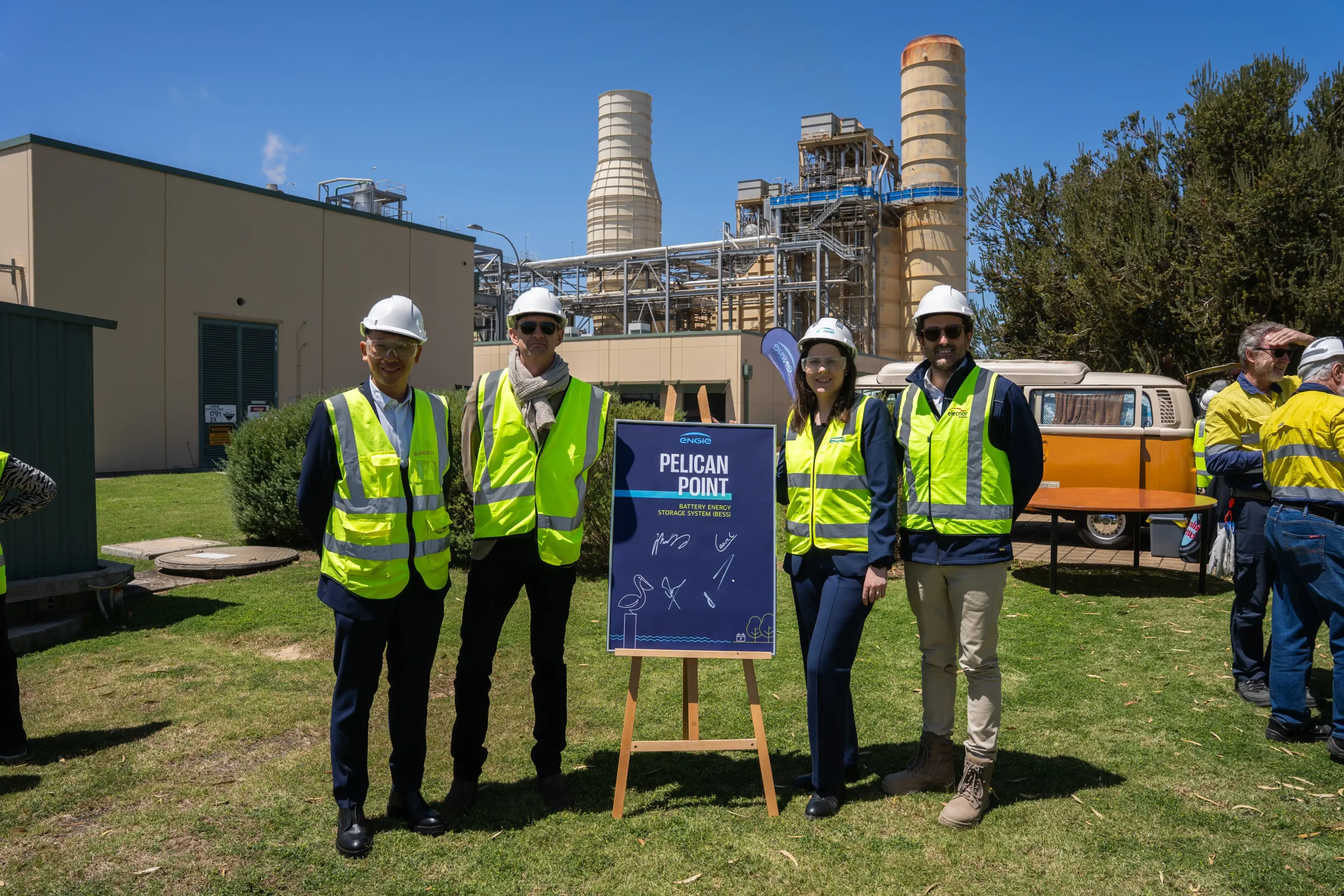
ENGIE Australia & New Zealand improved customer operations by reducing manual effort, improving service consistency, and strengthening visibility across a multi-geography contact centre model that included offshore delivery.
Company
ENGIE Australia & New Zealand
Services Provided
Customer service operations
Contact centre support
Workforce management support
Quality assurance support
AI-enabled customer experience tools
Industry
Energy and utilities
Locations
Australia
Philippines
Fiji
India
Vietnam
Operating Model
Customer operations supported through a multi-geography delivery model using third-party-operated contact centres and offshore service support, alongside a cloud-based customer experience platform
Delivery Structure
Customer support was delivered through call centre operations across Australia, the Philippines, Fiji, and India. Additional digital and data support was also sourced across India, Vietnam, and the Philippines. Customer experience operations were supported through Genesys Cloud and its AI-enabled capabilities.
Why This Approach
ENGIE needed to reduce manual work, improve agent productivity, and create more consistent customer journeys across a service model that was already distributed across multiple delivery partners and locations.
Success Snapshot
Performance Drivers
- Manual after-call work and wrap-up processes were reduced through AI-assisted workflows.
- Workforce management visibility was consolidated into a single platform across partner organisations.
- Quality and promise tracking were improved through speech, text, and analytics tools.
- The business combined platform modernisation with a multi-geography support model rather than treating them as separate issues.
Outcomes
- 40% reduction in manual effort
- 75% improvement in Net Promoter Score
- 120% reduction in customer complaints, as reported in the source
- Stronger consistency in post-interaction summaries and audit support
- Improved forecasting, scheduling, and staffing visibility across sites
Company Background
ENGIE Australia & New Zealand operates in the utilities sector, where customer service sits close to billing, account management, service trust, and retention. The business serves a large retail customer base of roughly 690,540 customers across the operation.
Its contact centre model already relied on multiple partner organisations and offshore locations like third-party-operated call centre operations across Australia, the Philippines, Fiji, and India, with additional digital and data support capabilities across India, Vietnam, and the Philippines.
This meant the business was not simply trying to launch a new customer service function. It was working inside an existing multi-location, multi-partner environment and needed to improve how service was delivered within that structure.
Industry and Operating Context
Customer journeys are often more complex within the Energy & Utilities industry. Customers may contact support about billing, account issues, service concerns, pricing, or follow-up actions promised during previous interactions. In a price-sensitive market, even small service failures can have a bigger commercial impact.
That puts pressure on both people and systems. Agents need to handle customer conversations well, but they also need to complete after-call work accurately, capture commitments properly, and work inside service models that are often spread across multiple teams and locations.
When those workflows are still manual, agent productivity drops, and quality checking becomes harder to scale. Over time, those small inefficiencies start affecting both service standards and internal control.
Core Problem
ENGIE’s challenge was the amount of manual effort and workflow friction sitting inside the service model.
Post-call summarisation and wrap-up coding were taking too much time and creating inconsistencies in the data captured after customer interactions. Quality teams also had to manually identify and verify promises made to customers, such as callbacks or pricing-related actions. That work was important, but difficult to scale consistently through manual review.
At the same time, workforce management processes were fragmented across three partner organisations using separate systems. That made forecasting, scheduling, and staffing visibility harder to manage across the broader contact centre operation.
Outsourcing and CX Solution
ENGIE addressed this through a combination of platform modernisation and operational consolidation.
The business migrated to Genesys Cloud and implemented AI-enabled capabilities, including Agent Copilot, Supervisor Copilot, Virtual Supervisor, workforce management, predictive engagement, quality management, and speech and text analytics.
The immediate goal was to remove low-value admin burden from agents so they could stay more focused during customer interactions. AI-supported interaction summarisation reduced the need for manual note-taking, while recommended wrap-up codes made after the call work faster and more consistently.
Quality operations were also strengthened. Instead of manually checking customer commitments at scale, the platform could automatically detect, categorise, and verify promises made during interactions. That gave quality teams more room to focus on coaching and development rather than spending as much time on manual verification.
On the workforce side, ENGIE consolidated visibility across its service operations by bringing workforce management into a single platform. This improved forecasting, scheduling, and coverage decisions across partner organisations and sites.
What makes this case useful is that the platform change sat on top of an already distributed support model. Offshore and third-party delivery were already part of the operating reality. The Genesys implementation improved how that model functioned rather than replacing it.
Results
The reported results point to gains across both efficiency and customer experience.
ENGIE reported a 40% reduction in manual effort and a 75% improvement in Net Promoter Score. The source also reports a 120% reduction in customer complaints as written. Beyond that, the business described stronger consistency in summaries and audit records, along with better visibility for forecasting, scheduling, and staffing decisions.
Agents spent less time on repetitive admin work. Quality teams had better tools to monitor service commitments. Supervisors had better visibility into workforce planning across the organisation. That combination supported a more consistent customer journey inside a service model that was already spread across multiple locations and partner teams.
Conclusion
ENGIE Australia & New Zealand’s case shows that customer service performance in utilities is often shaped by workflow design as much as staffing levels.
The main issue was the drag created by manual processes, fragmented workforce visibility, and inconsistent service workflows inside a distributed operating model. ENGIE addressed that by modernising its customer experience platform and using AI-enabled tools to reduce admin burden, improve quality processes, and strengthen planning across locations.
Better customer operations usually come from improving the system around the work, not just asking teams to work harder inside the same setup.
ENGIE’s case shows that in utilities, customer experience often breaks down in the operational details. After call work, promise tracking, workforce coordination, and follow-through across multiple service partners all shape what the customer actually experiences. Offshore 24/7 helps energy and utilities providers build offshore support around those recurring workflows so the broader contact centre model is easier to coordinate, easier to support, and less dependent on fragmented manual effort.